A suit set can look beautifully balanced in a photograph and still feel wrong when you sit down, raise your arms or walk to work. The problem is not necessarily your size. It may be the shoulder position, the shape of the armhole, the amount of room through the hips, or a pair of trousers measured differently from the kurta. Finding a comfortable ready-to-wear fit means looking at the whole outfit, not just choosing the letter you usually wear.
The most useful starting point is simple: measure yourself, compare those measurements with the chart for the exact garment, and check how the kurta and bottoms are meant to sit. A familiar XL or 2XL label is a starting clue, not a reliable measurement across every design. Fabric, lining, cut and the way you prefer to dress all affect your decision.
This guide takes you through that process without rigid body-shape rules or promises of a universally flattering fit. The goal is a suit set that lets you move naturally, feels appropriate for your working day and looks intentional rather than constantly needing adjustment.
Start with the outfit, not the size label
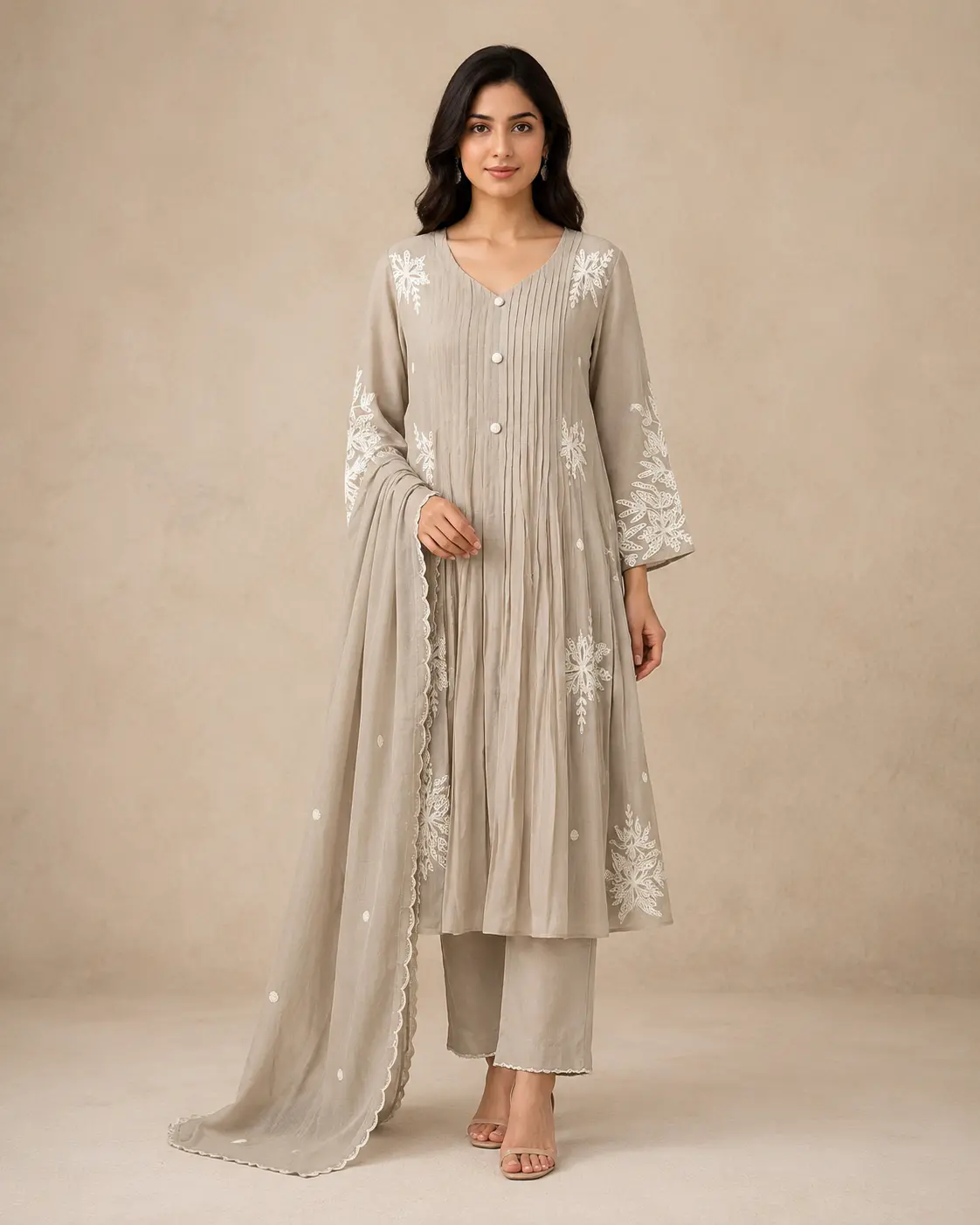
Before reaching for a measuring tape, read the product information. Is the set a straight kurta with trousers, an A-line kurta with relaxed pants, or a more flared design? Is the fabric described as woven, knitted or stretch? Is there a lining? Does the waistband have elastic, a drawstring, a zip or a fixed fastening? These details tell you what you need to check.
A fixed waistband and an elasticated waistband do not behave in the same way. A close-fitting sleeve needs different attention from a roomy sleeve. A long kurta with side openings may move differently from one without them. None of these options is automatically better. The useful question is whether that construction works for your measurements, your movements and your preferred amount of coverage.
Also check what the purchase actually includes. A photograph may show accessories or a styling layer that is not part of the set. The fit assessment should be based on the garments supplied. If the page says kurta, bottoms and dupatta, assess each of those components. If the component list is unclear, ask before ordering rather than assuming.
Decide what comfortable means for your day
Picture an ordinary day in the outfit. You might sit at a desk, reach for a shelf, commute in a car, climb stairs, stand during a presentation and go out afterwards. A garment that feels fine while standing still may pull across the back when typing or become uncomfortable at the waist after lunch.
Write down your non-negotiables. Perhaps you want sleeves that stay comfortable at the elbow, trousers that do not cling to the calf, or a neckline that feels secure when leaning forward. These are practical preferences, not flaws to correct. Having them clear helps you compare two suitable sizes more calmly.
For a broader look at the decisions beyond sizing, read our guide to choosing a kurta set for the office. Fit is one part of choosing an outfit, alongside fabric, detail and the level of formality you need.
Take measurements you can actually use
Use a flexible measuring tape and measure over the undergarments or light base layer you would normally wear. Stand naturally, with your weight balanced and your shoulders relaxed. Do not hold your breath, pull your stomach in or tighten the tape to reach a preferred number. The measurement is information for choosing clothing, not a score.
Keep the tape level around the body wherever you are measuring a circumference. A mirror or another person’s help can make that easier. Record the unit beside every number. Mixing centimetres and inches is an avoidable source of wrong orders, particularly when you move between different websites.
Take important measurements twice. If the results differ, check tape position and posture, then measure again. You do not need to chase tiny fluctuations, but a tape that has slipped diagonally across the back can make the comparison misleading. Note when you measured, especially if you are using an old saved size record.
Bust and upper body
Measure around the fullest part of the bust, keeping the tape horizontal and comfortably against the body. This is different from an under-bust measurement. Avoid flattening the bust with the tape or adding extra room yourself unless the seller’s instructions specifically ask you to do so.
Shoulder width is often easier to compare using a well-fitting garment rather than trying to measure yourself alone. A shoulder seam that sits in the right place can make an otherwise simple kurta look considered. For designs with dropped shoulders, however, the seam position is intentional, so compare the construction rather than assuming every seam should land identically.
Upper-arm circumference also matters. If you often find sleeves restrictive, do not rely on the bust measurement alone. Ask for sleeve or upper-arm information if it is absent. Increasing the whole garment size may create excess fabric elsewhere while leaving the underlying sleeve shape unsuitable.
Waist, hips and sitting room
Measure your natural waist according to the chart’s instructions, then separately identify where you intend the trouser waistband to sit. Those may not be the same place. A high-rise trouser and a lower-sitting trouser can require different comparisons even when the size label is identical.
For hips, measure around the fullest part rather than the point where a kurta happens to end. The kurta may need enough room through this area even if its bodice fits well. Bottoms also need room for sitting and walking, so a neat standing outline should not be your only test.
If you use a favourite trouser as a reference, select one with a similar waistband and silhouette. A stretchy legging is not a helpful benchmark for a woven straight pant. Nor should a loose lounge trouser be treated as proof that every tailored bottom in the same labelled size will fit.
Lengths and proportions
Check kurta length, sleeve length and trouser length separately. A model’s photograph cannot tell you where the hem will fall on you without further information. Model height, footwear, pose and camera angle all influence the impression of length.
A helpful approach is to measure a kurta whose length you already enjoy and compare like with like, using the seller’s stated measurement points. For trousers, distinguish total outside length from inseam. They are not interchangeable. If the listing gives only one number without explaining it, seek clarification.
Think about your usual shoes. A hem that looks right with a heel may drag with flat footwear, while a deliberately cropped trouser may look shorter than you expected. This is not necessarily a sizing fault, but it should be a conscious choice rather than a surprise after delivery.
Read the size chart before choosing a size
The crucial question is whether the chart lists body measurements or garment measurements. A body chart indicates the wearer measurements a size is designed to accommodate. A garment chart describes the finished garment itself. The space between body and garment helps determine ease and movement, so treating the two charts as equivalent can lead to a poor fit.
Do not add a fixed allowance to every number without understanding the chart. The appropriate amount of ease depends on the cut, fabric, construction and intended look. Where a brand provides specific fit guidance, use that alongside the measurements rather than replacing it with a universal rule.
Read any notes about how the chart was measured. A flat width across a garment is different from a full circumference. A chart may label a waist measurement as relaxed or stretched. If this is not clear, a short question to the seller is more useful than guessing.
A simple comparison worksheet
- Record your current body measurements and the units used.
- Record the measurements of a comparable garment you find comfortable.
- Identify whether the product chart refers to the body or finished garment.
- Compare bust, hips, upper arm and the relevant waistband measurements.
- Check shoulder, sleeve, kurta and bottom lengths where provided.
- Flag missing information instead of treating a blank as a standard value.
This small worksheet also makes customer support more effective. Instead of saying that you are normally XL, you can explain which measurement concerns you and what fit you prefer. The reply can then address the actual product rather than offering a general guess.
For a set with more than one colour, check whether each colourway uses the same stated construction and chart. Similar-looking outfits are not always identical in every detail. Product-specific information should take priority over an assumption based on the group photograph.
Check the kurta from shoulder to hem
Shoulders and neckline
A well-fitting shoulder allows the sleeve to hang naturally without pulling the neckline out of place. In a conventional set-in sleeve, a seam that extends too far beyond the shoulder can look loose, while one sitting too far inward may feel restrictive. Deliberately dropped or extended shoulders are a different design, so judge them on their intended line.
Look at the neckline while standing, sitting and leaning forward. It should feel comfortable and appropriate for you in all three positions. A decorative neckline that looks beautiful in a straight-on picture may sit differently once you move. Check fastening access too, particularly when pulling a garment over the head.
Neckline comfort is not solved by a size label alone. The opening’s shape, depth and finishing matter. If you consistently prefer a particular neckline, use that knowledge when choosing a design rather than relying on a scarf or dupatta to compensate for a fit you dislike.
Bust and upper back
Across the bust, look for pulling, gaping at a placket or embroidery that seems under tension. Across the back, check whether you can move your arms forward comfortably. A garment should not require you to hold your posture unnaturally to keep the front looking smooth.
Some creasing is normal when fabric follows a moving body. The distinction is between ordinary folds and persistent strain. If the kurta pulls noticeably whenever you reach or sit, the measurement or cut may not be right for you. Conversely, excess fabric can be a deliberate part of a relaxed silhouette rather than evidence that you chose incorrectly.
Evaluate the actual intended style. A straight workwear kurta does not need to hug the waist, and an A-line garment should not be judged as if it were a fitted dress. Understanding the cut prevents unnecessary sizing down merely to remove room that was designed into the garment.
Sleeves, armholes and cuffs
Bend your elbows, reach forward and lift your arms to a comfortable everyday height. Notice whether the sleeve catches at the upper arm or whether the entire kurta lifts sharply. An armhole can be too tight, too low or simply shaped differently from what suits your movement.
Check decorative cuffs and sleeve borders closely. A sleeve may have enough room through the arm but a firm opening that is difficult to move past the elbow. If you like pushing sleeves up while working, consider whether the design allows that without straining embroidery or distorting the cuff.
Three-quarter sleeves, full sleeves and shorter sleeves can all work for professional dressing. The right choice depends on the garment and your preference. Do not treat sleeve length as a measure of professionalism; prioritise a comfortable, well-finished result that fits your workplace.
Hips, side openings and hem
A straight kurta needs sufficient room through the hips to fall cleanly and allow movement. Side openings help the garment move, but they do not make a tight hip measurement irrelevant. Check whether the fabric catches when you sit or whether the front rides upward repeatedly as you walk.
For an A-line or flared design, observe where the volume begins. Room at the hem does not guarantee room across the bust or upper arm. Equally, choosing a larger size to create more flare can alter the shoulders and neckline in ways you did not intend.
Review the hem with your expected footwear and bottoms. You want the components to look proportionate without requiring constant adjustment. If silhouette is your main uncertainty, our straight, A-line and Anarkali guide explains the differences in a workday context.
Fit the bottoms as a separate garment
Matching fabric does not mean matching fit requirements. A kurta and its trousers cover different measurements and movements. Read the bottom details with the same care as the top, especially if you often need a different size in trousers.
For an elastic waistband, ask whether measurements are given relaxed, stretched or as a recommended body range. Elastic should provide flexibility without becoming your only source of comfort. A waistband that stretches enough to go on may still press uncomfortably during a full seated day.
For fixed waistbands, the exact measurement and fastening are particularly important. Check the rise and how the trousers are intended to sit. If the waist fits but the hips or thighs feel restricted, a belt or a different waistband position will not necessarily resolve the issue.
Rise, thigh and knee room
The rise affects how trousers feel when you sit and how they sit under the kurta. If the garment pulls at the crotch or slides down when you move, the issue may involve rise or overall shaping rather than simply the waistband size.
Check thigh and knee room by sitting normally and taking several steps. Straight pants should not automatically be expected to feel like leggings. A relaxed pant should offer the intended shape without being mistaken for an incorrectly sized slim pant.
Descriptions such as straight pants, churidar, sharara and salwar refer to different constructions. Look at the product information and available images together. If they conflict, ask which bottom is actually supplied. Choosing the correct size cannot compensate for receiving a different bottom style from the one you expected.
Length and ankle finish
Inspect the hem, ankle opening and any decorative border. A narrow ankle opening can affect how easily the trousers go on, while a deep border may limit shortening options. If an alteration is necessary, find out whether the construction allows it before committing.
Try the trousers with the footwear you expect to wear most often. A practical length lets you walk and climb stairs without stepping on the fabric. Do not rely on a posed image alone to establish that clearance because the model may be wearing different shoes or standing differently.
If you are between sizes in the top and bottom, ask whether separate sizing is available. Do not assume it is offered, and do not assume every set can be altered easily. Sometimes choosing another cut is a better solution than forcing one set to work.
Use a realistic movement test
When trying a new set, follow the seller’s return conditions and keep the garment in the required condition. Within those limits, assess more than the front view. Stand, sit on a normal chair, reach forward as if typing, bend your elbows and walk a few steps.
Notice where your attention goes. Are you repeatedly pulling the hem down, rearranging the neckline, releasing the waistband or smoothing the upper arms? A garment that requires constant management may not be the right workwear choice even if it photographs well.
Try the dupatta in the way you expect to wear it. It should not be used to hide a fit concern that will bother you throughout the day. If you prefer a secure drape, test whether it stays manageable while carrying a bag or using both hands.
The seated test is especially useful
Office dressing often involves hours of sitting, but product photos are usually taken standing. Sit with your feet comfortably placed and your posture natural. Check the waist, hips, upper back and neckline. You should not have to sit rigidly to preserve the outfit’s appearance.
Then stand again and see how the clothes settle. Normal fabric folds are not a failure. Persistent twisting, dragging or pulling can indicate that the cut or size needs reconsideration. The purpose is not to eliminate every crease but to find an outfit that behaves comfortably in ordinary use.
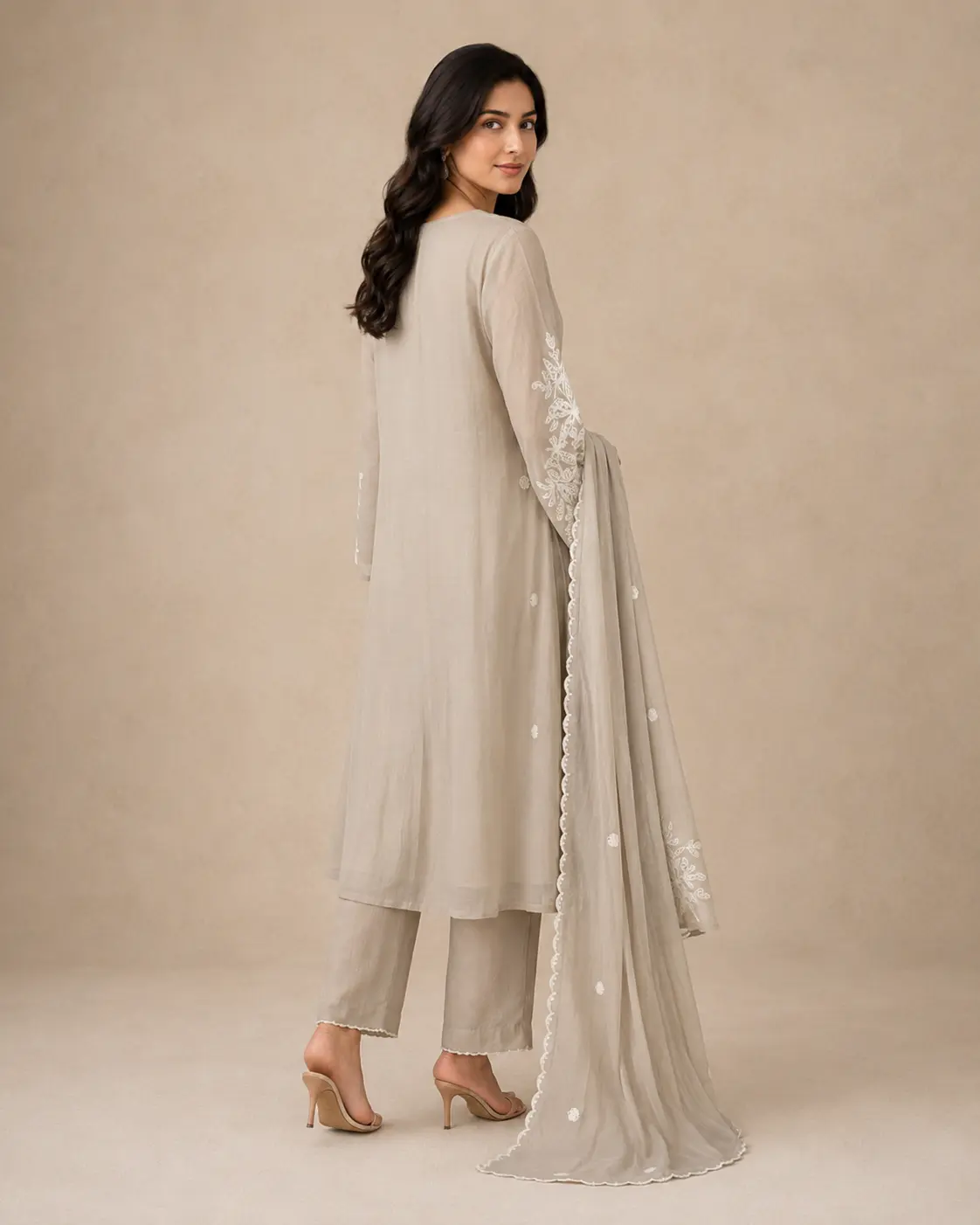
Look at the set from the side as well as the front. Side views can reveal proportion and strain that a straight-on mirror view misses. If possible, take a simple personal reference photo without filters so you can compare the fit calmly rather than making a rushed decision.
If you are between sizes, identify the actual problem
Being between two sizes does not automatically mean choosing the larger or smaller one. Start with the area that needs the most room and the parts of the garment that are least easy to alter. Shoulder construction, armhole shape and embroidered panels can make adjustments more complicated.
A slightly roomy waist in a straight kurta may be acceptable if the bust, hips and sleeves are comfortable. A tight upper arm may not be acceptable even if the rest looks neat. Similarly, a bottom that feels comfortable standing but restrictive sitting should not be judged only by its waistband label.
Share your measurements and preferred fit with the brand. Ask a focused question: whether the chart is a body chart, whether the fabric stretches, or how the sleeve opening is measured. Avoid requesting a guaranteed fit based only on height and weight, which do not describe every relevant proportion.
When an alteration makes sense
A small adjustment may help when the basic construction fits and the alteration does not interfere with the design. But shortening a bordered hem, moving a pocket or changing an embroidered sleeve can be more involved than taking in a plain seam.
Before altering, check the store’s return conditions and consult someone who understands the garment. An alteration usually changes the garment’s condition, so it should not be treated as a reversible fitting experiment. Keep the original design and intended balance in mind.
If many areas need correction, consider another design instead. Good fit should reduce effort, not create a tailoring project you did not want. There is no obligation to make every attractive suit set work for you.
Fabric and lining can change how a size feels
Two garments with similar measurements can feel different because of their fabric and construction. A fluid fabric may move around the body differently from a firm woven fabric. A lining can change the feel and available movement even when the outer layer appears loose.
Read the composition and lining information for each component. A cotton kurta does not establish the fabric of the trousers or dupatta. Nor does a fabric name alone establish stretch, opacity or care requirements. Ask for the missing detail rather than filling it in from appearance.
Do not size down simply because a photograph looks loose. Styling, pinning, posture and camera perspective can affect the visual impression. Measurements and clear construction information are more useful evidence than a single hero photograph.
Three fit situations and how to approach them
The bust fits, but the sleeves feel tight
Do not immediately assume the whole outfit needs to be larger. Compare upper-arm and sleeve-opening measurements if available, and look at the armhole construction. A different sleeve shape may be more suitable than a larger version of the same one. If you cannot obtain that information, treat the uncertainty as a reason to pause rather than hoping the fabric will loosen with wear.
The kurta fits, but the waistband feels uncomfortable
Check where the trousers are intended to sit and whether the chart measures the relaxed waistband or the body. Then consider hip and rise measurements. Moving the waistband higher or lower may change the length and fit elsewhere, so it is not always a solution. Ask about separate sizing before choosing an alteration, and do not assume every elastic waistband has the same stretch range.
The set looks shorter than it did online
Compare the stated kurta and trouser lengths with garments you already own. Check whether the model was wearing heels and whether the outfit is intended to be cropped. If the stated length is accurate but the proportion does not suit your preference, that is still useful information for your next choice. You are choosing a garment for your body and routine, not trying to recreate a photograph exactly.
In each situation, separate a measurable mismatch from a styling preference. The first may require a different size or clarification from the seller. The second may be resolved by another silhouette, length or pairing. Keeping those questions separate makes shopping less frustrating and prevents unnecessary changes to a garment that is simply designed differently from what you wanted.
Your final online buying checklist
- I know which garments are included in the set.
- I checked the exact colourway and its product information.
- I know whether the size chart gives body or garment measurements.
- I compared the kurta and bottoms separately.
- I checked lengths and the intended silhouette.
- I considered sitting, walking and normal arm movement.
- I asked about any missing fit detail rather than guessing.
- I read the current return and exchange conditions before ordering.
For a complete pre-purchase review, use our suit-set buying checklist alongside this fit guide. It covers the non-sizing details that help you make a considered decision.
If you need clarification about an Inara Ethnic garment, contact us with the product name, the size you are considering and the measurement you want confirmed. A specific question is easier to answer accurately than a general request to choose your size.
Frequently asked fit questions
Should I order my usual size?
Use your usual size to begin, then check the specific product chart. Different silhouettes, fabrics and brands can use different measurements. The most reliable choice comes from comparing the relevant numbers and construction, not assuming that a familiar label always fits the same way.
Should I size up for office comfort?
Not automatically. A larger size may give more room in one area while making the shoulder or neckline too loose. Identify where you need ease and compare that area with the chart. Comfort depends on a suitable cut as well as sufficient room.
Can I judge fit from the model photograph?
A photograph helps you understand styling and the intended outline, but it cannot establish how the garment will fit your body. Use the measurements, component information and any verified fit notes. Model imagery should complement those details rather than replace them.
What if my kurta size and trouser size are different?
Check both charts and ask whether the set offers separate sizing. If it does not, consider whether the intended cut is suitable or whether a different set would be easier. Do not assume the bottoms will fit simply because the kurta does.
Does a loose fit mean the outfit will look untidy?
No. A deliberately relaxed silhouette can look polished when its shoulders, lengths and proportions work well. The distinction is between intentional ease and a garment that shifts or overwhelms the intended outline. Your own comfort and preference matter more than a rigid rule.
What is the most useful question to ask before buying?
Ask about the specific uncertainty: whether a chart measures the body or garment, the waistband construction, sleeve room or a missing length. Share the relevant measurement and your preferred fit. Precise information gives you a stronger basis for deciding than a general reassurance.
A good fit should let you get on with your day
The right ready-to-wear suit set is not the one with the smallest label or the one that looks most dramatic in a still image. It is the one whose construction, measurements and proportions work together for you. When the shoulders sit comfortably, the bottoms allow movement and the lengths suit your routine, dressing becomes simpler.
Take the time to compare the details once. That habit makes future shopping easier too, because you learn which measurements and cuts matter most to your comfort. Choose with that knowledge, then let the outfit support your day rather than occupy your attention.
