
A useful business-travel wardrobe is not the one with the fewest items in the suitcase. It is the one that lets you move through every part of the trip without repeatedly wondering whether you brought the right clothes. For a woman who prefers Indian workwear, that means thinking about the journey, the meeting, the climate, the hotel and any plans after work, rather than packing a separate suit set for every possibility.
The most practical starting point is a small group of familiar, well-fitting outfits with compatible accessories. Choose clothes you can sit, walk and work in, keep one dependable meeting outfit ready, and leave some breathing room in both your schedule and your luggage. Beautiful embroidery belongs in that plan, but it should work with the demands of the trip, not create another thing to manage.
This guide takes you from the first itinerary check to the final unpacking. The examples are suggested packing systems, not fixed rules or claims that every fabric behaves the same way. Always follow the care instructions for the garments you own, and use actual product measurements and component details when buying anything new.
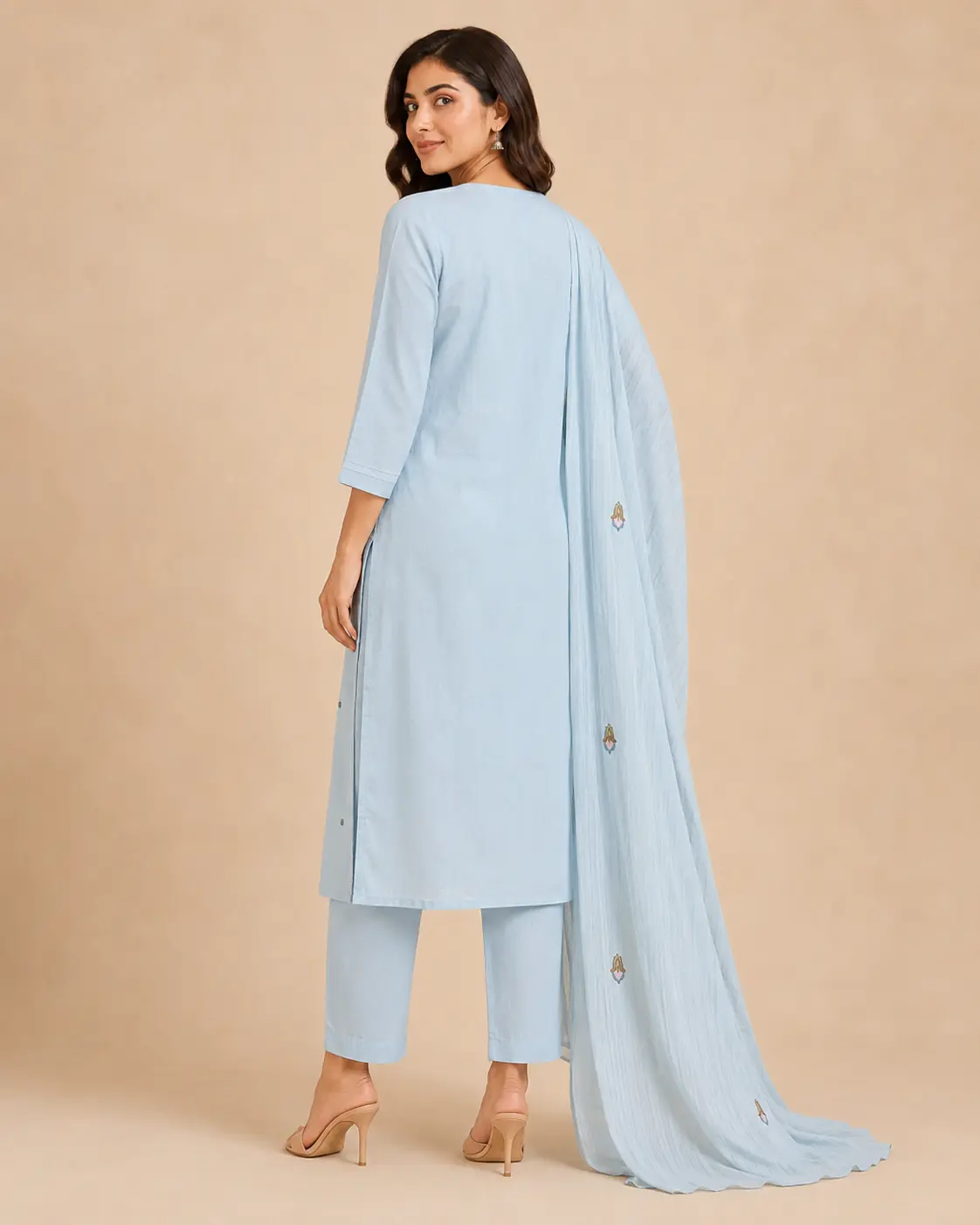
Start with what the trip actually involves
Before taking anything out of the wardrobe, write a simple timeline. Include the journey, your first appointment, any long periods of sitting, walking between venues, meals with colleagues and the return journey. A two-night trip might contain five distinct dressing situations, but that does not automatically require five complete outfits. Some situations can share an outfit; others deserve a change because of comfort, freshness or formality.
Separate confirmed events from imagined ones. A scheduled client dinner needs consideration. An unlikely invitation to a highly formal event does not necessarily justify another bulky ensemble. If the itinerary is vague, ask the organiser about dress expectations and the type of venue. A short clarification is often more useful than an extra suitcase.
Also check how much time you have between arrival and work. Travelling straight to a meeting is very different from arriving the previous evening. In the first case, your travel outfit must be appropriate on arrival, or you need a realistic place and time to change. In the second, you can travel comfortably and give the meeting outfit time to hang after unpacking.
Finally, think about your role. Hosting, presenting, attending and moving between exhibition stands place different demands on clothing. The right wardrobe is specific to the activities, not merely the destination. A professional appearance matters, but so does being able to focus on your work once you get there.
Plan for the journey and the destination separately
The temperature outside is only one part of the experience. You may leave home in warm weather, spend hours in air-conditioning and arrive somewhere cooler. Choose layers that can be adjusted easily rather than expecting one garment to solve every temperature change. A familiar light layer can be useful, provided it works with the outfit and does not interfere with embroidery or the dupatta.
Think about the transport itself. Long train journeys, short flights and car travel create different opportunities to move, change or access your luggage. Clothing that feels fine while standing in front of a mirror may become distracting after extended sitting. Before departure, sit in the intended travel outfit, bend to lift a bag and reach forward as you would when using a laptop.
Check the bottom waistband, the room at the knees and hips, and whether the kurta rides up or pulls across the shoulders. These observations are more useful than relying on a size label alone. If fit is the unresolved part of your decision, use the ready-to-wear suit-set fit guide before making travel purchases.
Weather preparation should be practical rather than dramatic. If rain is likely, choose footwear and a hem length you can manage on wet paths, and protect the garment in your bag. No outfit becomes weatherproof simply because it is described as travel-friendly. Build the plan around the actual journey you expect.
Build a capsule around complete outfits, not isolated pieces
Start by choosing the outfit for the most important work commitment. This becomes the anchor. Then select another outfit that shares at least some accessories with it: perhaps the same shoes, work bag or simple earrings. Shared accessories reduce packing without making the clothes feel repetitive. The objective is a coherent group of outfits, not a rule that everything must be beige or navy.
Try each complete look before packing. Include the intended underlayers, footwear, dupatta and bag. This reveals gaps that are easy to miss when garments are lying separately on the bed. A neckline may need a different underlayer, a trouser hem may not work with the packed shoes, or the dupatta may compete with the jacket you planned to wear.
Keep one comfortable travel outfit separate from a delicate meeting set if the itinerary permits. A small capsule still needs enough clean clothing for the trip. Rewearing is an option when garments remain clean and appropriate; it is not a requirement, and a packing guide should never pressure you to rewear clothing that no longer feels fresh.
Leave a little room for uncertainty. An extra essential underlayer or a practical spare bottom may be more useful than an elaborate evening outfit you are unlikely to wear. Choose backups according to the consequence of needing them. The smartest capsule is selective, not fragile.
Use colour compatibility to simplify decisions
A workable travel palette can contain one or two grounding colours and a more expressive accent. For example, a soft neutral outfit and a deeper blue outfit may share a restrained metallic earring and a brown or black work bag, depending on the pieces you already own. The exact combination matters less than seeing the items together before departure.
Do not assume that two colours with similar names will match. Cream and ivory can have noticeably different undertones, while one brand’s navy may be brighter than another’s. If you intend to mix a kurta with a bottom from another set, test the combination in daylight. It may look intentionally coordinated, pleasantly contrasting or simply mismatched; the name on the label cannot tell you which.
Embroidery can provide a useful bridge between colours. A small accent in the threadwork may connect with a dupatta or accessory without requiring an exact match across the whole outfit. Keep the connection subtle enough that you can repeat the accessory with another look.
There is no need to avoid colour on a business trip. What helps is reducing the number of unrelated colour stories. If you enjoy richer shades, pack them with familiar accessories and a clear outfit plan. The workwear colour guide explains how to build that balance without rigid rules about what women should wear.
Assess fabric through the actual garment
A fibre name alone does not tell you how a finished suit set will travel. Weight, weave, lining, construction, embroidery and finishing all affect the experience. Two garments described with the same broad fabric name can feel and behave differently. Read the details for the kurta, bottoms and dupatta separately rather than assuming the whole set uses one material.
For a long working day, consider how the garment feels against the skin, how much room it provides and whether the lining changes the overall weight. For packing, consider whether the embellishment needs protection and what care is permitted on arrival. A fabric that you personally enjoy wearing is usually a safer travel choice than an unfamiliar one bought solely because it is called premium.
Do not expect wrinkle-free performance unless that is a verified property of the specific garment. Many fabrics crease when folded or compressed. The useful question is not whether any crease will appear, but whether you have an appropriate way to prepare the outfit before wearing it. If the care label requires professional cleaning, build that into the plan rather than experimenting in the hotel.
When buying online, ask for missing composition or lining information before ordering. A photograph can show surface appearance, but it cannot establish breathability, softness or how the fabric will feel over several hours. Those are not details to infer from a styled image.
Choose silhouettes that suit the work you will be doing
A straight suit can be a straightforward option for a busy itinerary, while an A-line shape may offer a different sense of movement. A fuller silhouette can also be appropriate if it suits the setting and you are comfortable managing it. The choice should come from the garment’s actual cut and your activities, not a rule that one shape is always professional.
Consider where volume sits. A flared kurta, wide bottom and substantial dupatta create more fabric to arrange when sitting in a narrow seat or working at a small table. That does not make the outfit unsuitable, but it may make it less convenient for a particular travel day. You can reserve it for an event where you have more space and time.
Check the garment from the side and back as well as the front. Lift your arms gently, sit down and take a few steps. Notice whether the shoulder seam stays comfortable, whether the side openings provide enough movement and whether the bottoms catch under your shoes. These checks are especially useful if the product photograph was styled in a pose you would not use during your day.
A travel capsule should support normal movement. If an outfit requires continuous adjustment at home, travelling is unlikely to make it easier. Choose the pieces that let you forget about your clothes once you have dressed.
Keep embroidery beautiful and manageable
Embroidery adds interest without requiring a large collection of accessories. For business travel, look at its placement as well as its appearance. A detailed neckline can remain visible under a light layer. Heavy work at a cuff may need more care around laptop edges, bags or jewellery. Delicate surface embellishment can also require protection when packed beside zips and buckles.
Choose the amount of detail according to the event. A quiet workday and a hosted dinner need not look identical, but you can often use the same set differently through the dupatta and accessories. A refined embroidered outfit may already have enough visual interest for the evening without adding several statement pieces.
Inspect the care label and any instructions supplied with the garment. Do not iron directly over decorative work unless the instructions allow it. Avoid improvised steaming methods or spraying unknown products onto the fabric shortly before an important appointment. The safest preparation is the method recommended for that specific set.
When packing, keep sharp jewellery and exposed fastenings away from threadwork. Small separate pouches can help prevent accidental catching. The goal is not to treat every embroidered garment as too delicate to use, but to reduce avoidable friction so the details you chose remain the focus.
Make the dupatta work for your day
A dupatta can change the impression of a suit set, but it also needs to work with the way you move. Before packing, try the drape you intend to use with your work bag and any jacket or layer. Check whether the fabric slips, catches or limits your arms. A look that is elegant for a photograph may not be the one you want while carrying a laptop and boarding transport.
For a meeting, choose a drape that stays comfortable while you sit and gesture. If you use a fastening, make sure it is suitable for the fabric and does not damage the embroidery. Do not force a pin through delicate material simply to reproduce a styling image. Sometimes a simpler arrangement is the better choice.
Pack the dupatta with the outfit it belongs to, or label a pouch clearly if you separate components. This prevents the last-minute search for the matching piece. If you plan to substitute another dupatta, check the complete combination in advance and make sure the resulting outfit still feels intentional.
Whether you wear a dupatta for every situation is a personal and dress-code decision. Verify what is included when purchasing a set, rather than assuming the styled image means every visible component is supplied. Accessories and extra layers shown in editorial photographs may be styling additions.
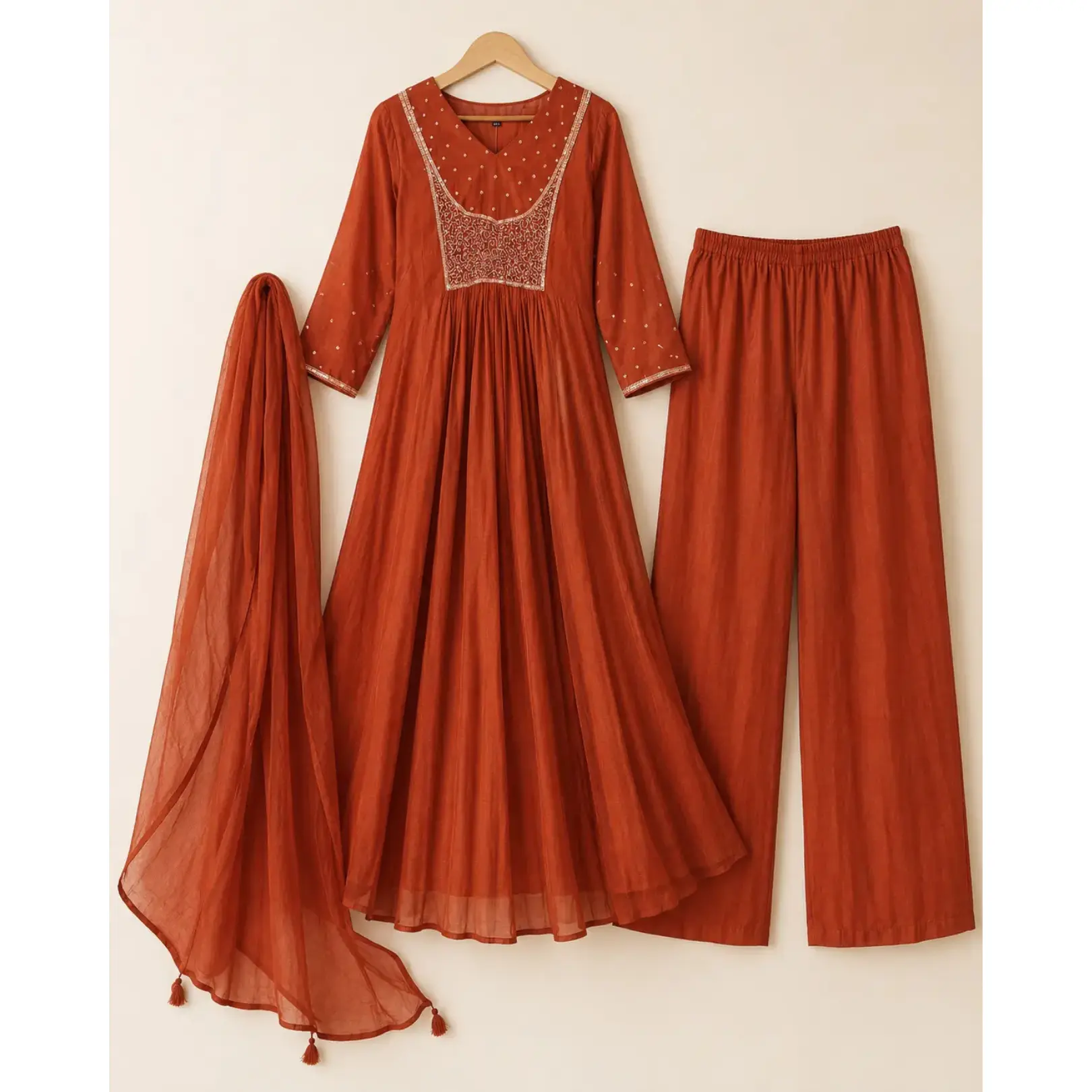
Choose footwear for the route, not just the photograph
Footwear has an outsized effect on how comfortable a trip feels. Consider walking distance, stairs, uneven paths, time spent standing and the formality of your appointments. A familiar pair that works with both planned outfits often earns its space more than a new pair selected only for appearance. Wear-test any new shoes before relying on them for a full workday.
Try the shoes with each bottom. The hem should sit in a way you can manage without catching or dragging. Switching from a higher heel to a flatter shoe can change how a long bottom behaves, so do not assume that both options work equally well. If a garment needs alteration, allow enough time to assess it properly before departure.
A second pair can be worthwhile when the itinerary genuinely calls for it, especially if one pair serves the journey and another the meeting. Keep shoes separated from clothing using a suitable bag or cover. Avoid placing decorative footwear directly against delicate embroidery.
Comfort is individual. There is no universal heel height or shoe style that suits every woman. Use your own experience, the demands of the trip and the outfit’s proportions. A polished look should not require you to spend the day distracted by footwear you cannot comfortably use.
Prepare the clothes before they enter the suitcase
Pack garments clean, dry and ready for the intended occasion. Check for marks, loose threads, missing fastenings or damage while you still have time to address them. Trying an outfit on at this stage also confirms that all its components are together. A quick visual inspection is far less stressful at home than in a hotel room before a presentation.
Follow the garment’s care instructions when removing creases. If professional care is needed, arrange it early enough that the outfit can be collected and checked. Do not pack clothing while it is still damp from cleaning or steaming. Give it time to dry fully and cool before folding.
Empty pockets and remove loose accessories that could mark the fabric. Place jewellery in its own pouch, close relevant fastenings carefully and make sure decorative elements are not pressing against another garment. A clean, smooth packing surface helps you see whether anything has been caught inside a fold.
Take a quick photograph of each completed outfit if that helps you remember the combination. This is a practical personal reference, not a need to document every item. On a busy morning, seeing the shoes, dupatta and earrings together can remove one more decision from the day.
Fold deliberately and avoid unnecessary compression
There is no single folding technique that is best for every embroidered suit. The safest approach depends on the fabric, construction and decorative work. Keep folds gentle where possible, avoid sharply creasing raised embellishment and place a suitable clean layer between surfaces that might rub. If a garment has special packing instructions, follow those first.
Pack heavier items so they do not crush delicate clothing. Shoes, toiletries and hard accessories should not press directly into embroidery. Use compartments or separate bags to keep them contained. A tightly packed case may be neat to look at but can leave little protection for a garment’s surface details.
Keep complete outfits organised in a way you understand. You might pack each set together or group similar components, but choose one system and make the first day’s clothing easy to reach. Repacking at every stop is simpler when you are not reconstructing the suitcase from scratch.
Do not overfill a bag simply because the zip still closes. Some space makes it easier to retrieve an item without disturbing everything else. Check your transport provider’s luggage rules directly before travelling; allowances and restrictions vary, and a clothing guide cannot replace the current information for your booking.
Plan a small, useful arrival routine
Once you arrive, unpack the most important outfit first. Hang or arrange it according to its care needs and inspect it in the room’s lighting. Check the front, back, hem and dupatta, not only the neckline. This gives you time to deal with an ordinary crease or find another solution if a component has been packed incorrectly.
Before using a hotel iron or steamer, make sure the garment permits that method and the equipment is suitable. If you are uncertain, ask the hotel about professional services rather than experimenting on an embellished area. Do not assume hanging a garment in a damp bathroom is harmless for every fabric or finish.
Lay out the full meeting outfit the evening before where possible. Keep the intended underlayers, shoes and accessories nearby. This avoids discovering in the morning that the chosen earring catches on the dupatta or that the only packed shoes do not suit the hem length.
Allow a few minutes for a movement check after dressing. Sit, reach and walk around the room. A final adjustment made calmly is preferable to managing the same problem throughout the day. Preparation should make the workday easier, not become a complicated ritual of its own.
Example one: a two-night meeting trip
Imagine a journey the evening before a client meeting, followed by a work lunch and a return journey the next day. A reasonable starting capsule might be a comfortable travel outfit, one complete meeting set, a second work-appropriate set and essential underlayers. Depending on your itinerary and personal preference, the second set may also serve the return journey if it remains clean and comfortable.
Choose the meeting outfit first. Pair it with shoes you already trust and one restrained accessory. Then test whether those shoes and the same bag work with the second set. If they do, the capsule becomes simpler without sacrificing variety. If they do not, change the second set before adding another pair of shoes automatically.
Pack the travel outfit where it can be kept separate after wearing. Carry enough essentials for the full trip and consider one practical backup if a delay or spill would leave you without an appropriate option. The correct amount depends on access to laundry, the schedule and your comfort with rewearing.
This is a planning example, not a minimum packing challenge. If your meeting includes a formal evening event, or your journey is particularly long, you may need another outfit. The point is to justify each item by a real use rather than pack for every imagined scenario.
Example two: a conference with an evening gathering
A conference can involve long seated sessions, standing conversations, photography and walking between rooms. Choose a main outfit that works across those activities. Consider whether a substantial dupatta or dramatic sleeve will be convenient while carrying a badge, notebook and bag. A modest amount of embroidery can provide interest without needing several accessories.
For an evening gathering, you may be able to keep the same suit and change only a few styling elements. Adjust the dupatta, choose a different earring or use a smaller bag if that is practical. Keep the change manageable: you should not need an entire second wardrobe to make the outfit feel appropriate after work.
If the event has a more formal dress code, plan accordingly instead of forcing a daytime set into a situation it does not suit. Ask the organiser or use the invitation’s wording as a guide. The office-to-dinner styling guide offers ideas for making thoughtful changes without overcomplicating the look.
Remember the return journey too. An outfit that is beautiful for an evening gathering may not be the most comfortable choice for an early departure. Keep a clean travel option available and pack the event clothing carefully once it is ready to be put away.
What to do when the itinerary changes
A small wardrobe becomes more useful when it has flexible parts. If a casual lunch turns into a client-facing event, a well-fitting set with simple accessories may adapt more easily than an outfit chosen only for travel. This is one reason to include at least one understated, complete look that you already know works in different settings.
When something unexpected happens, solve the specific problem rather than rebuilding the whole wardrobe. A marked dupatta might be removed or replaced if the outfit and setting allow it. A damaged fastening may require professional help or a backup outfit. Avoid improvised repairs that could harm the garment further, especially if you are unfamiliar with the material.
Keep useful information accessible: the hotel’s services, a trusted local alteration option if you already know one, and any care guidance supplied with the set. That does not mean every trip needs a repair kit or elaborate contingency plan. It means knowing which problems you can reasonably handle and which are better solved by changing clothes.
The best backup is often confidence in the outfits you packed. When each set fits well and has been tried as a complete look, an itinerary change becomes a styling decision rather than a crisis. Familiarity is a practical advantage.
Your final business-travel wardrobe checklist
- List every confirmed work and travel situation before choosing clothes.
- Check the destination’s expected weather and the practical demands of the journey.
- Choose the most important meeting outfit first.
- Try every complete look with its shoes, underlayers, bag and dupatta.
- Confirm fit while sitting, walking and reaching, not just standing.
- Read the care instructions for every garment component.
- Use accessories that work with more than one planned outfit where possible.
- Protect embroidery from sharp jewellery, zips and heavy luggage items.
- Pack enough clean essentials and a sensible backup for your circumstances.
- Keep the first outfit easy to access and allow time to prepare it on arrival.
- Check current luggage rules with the transport provider.
- Leave room for the actual purpose of the trip: your work.
When you are considering a new addition, browse the Inara Ethnic shop with the itinerary in mind rather than starting with a trend. Look for a set that fills a genuine gap, and use the individual garment details to decide whether it belongs in your travel wardrobe. One well-chosen outfit can be more useful than several uncertain options.
Frequently asked questions
How many suit sets should I pack for a short business trip?
Begin with the number of confirmed dressing situations, then see which can reasonably share an outfit. Account for journey length, freshness, weather and access to care. There is no universally correct number. A small capsule should still leave you with clean, appropriate clothing and a backup if a delay would otherwise cause a problem.
Are cotton suit sets always the best travel option?
Not automatically. Consider the actual weave, weight, lining, fit and care instructions. Cotton may suit your preferences, but a label alone cannot establish how a particular outfit will feel or crease. A garment you have comfortably worn before is often a more dependable choice than an unfamiliar one marketed for travel.
Can I wear an embroidered set on the journey?
Yes, if it suits the journey and you can wear it comfortably. Check whether the decorative work may catch against bags or seat surfaces, and whether the outfit provides enough movement. You may prefer to keep a delicate or important meeting set protected until arrival, especially when the journey is long.
Should I pack a different outfit for dinner?
That depends on the dress code and how the daytime outfit feels after use. A fresh, appropriate set may transition with a simple styling change, while a formal event or a long day may call for a change. Plan around your real schedule rather than treating outfit repetition as something to avoid.
What if a new suit arrives just before the trip?
Try it promptly, check all components and follow the seller’s conditions when assessing it. Do not assume alterations or exchanges can be completed before departure. Keep a familiar outfit ready until you are satisfied with the fit, care requirements and suitability of the new set.
A successful travel wardrobe feels considered, not overpacked. When the fit, combinations and care are already settled, your clothes can support the trip quietly, leaving your attention where it belongs.
